
The Transatlantic Slave Trade Uncovered: Reconnecting Africa and the Diaspora Through DNA

Updated: Aug 6
The Transatlantic Slave Trade Uncovered: Reconnecting Africa & the Diaspora Through DNA
The transatlantic slave trade forcibly displaced millions of Africans, severing family ties, identities, languages, and cultural heritage across generations. Today, advances in DNA testing, genetic genealogy, and family history research are helping descendants reconnect with their African origins in ways that were once unimaginable.
In this educational video, we explore the history of the transatlantic slave trade, its lasting impact on African communities and the global African diaspora, and how modern DNA technology is supporting identity restoration, family reconnection, and genetic health awareness.
In this video, you'll learn:
• The origins and scale of the transatlantic slave trade• How slavery disrupted African families and communities• The long-term effects on identity and heritage• How DNA testing helps reconnect descendants with African ancestry• The role of genetic genealogy in rebuilding family history• Why African representation in DNA databases matters• How AfriGenetry Link is advancing genomic equity and genetic health education across Africa
Whether you're exploring your African ancestry, researching family history, or interested in genetics and heritage, this video provides evidence-based insights into one of history's most significant human stories.
Learn more at: https://www.afrigenetrylink.org
Support our mission: https://www.afrigenetrylink.org/donate
Subscribe for more videos on African ancestry, DNA testing, genetic health, family history, and genomic research.
#AfricanAncestry #DNATesting #AfricanDiaspora #TransatlanticSlaveTrade #GeneticGenealogy #FamilyHistory
The transatlantic slave trade remains one of the darkest chapters and one of the greatest crimes in human history.
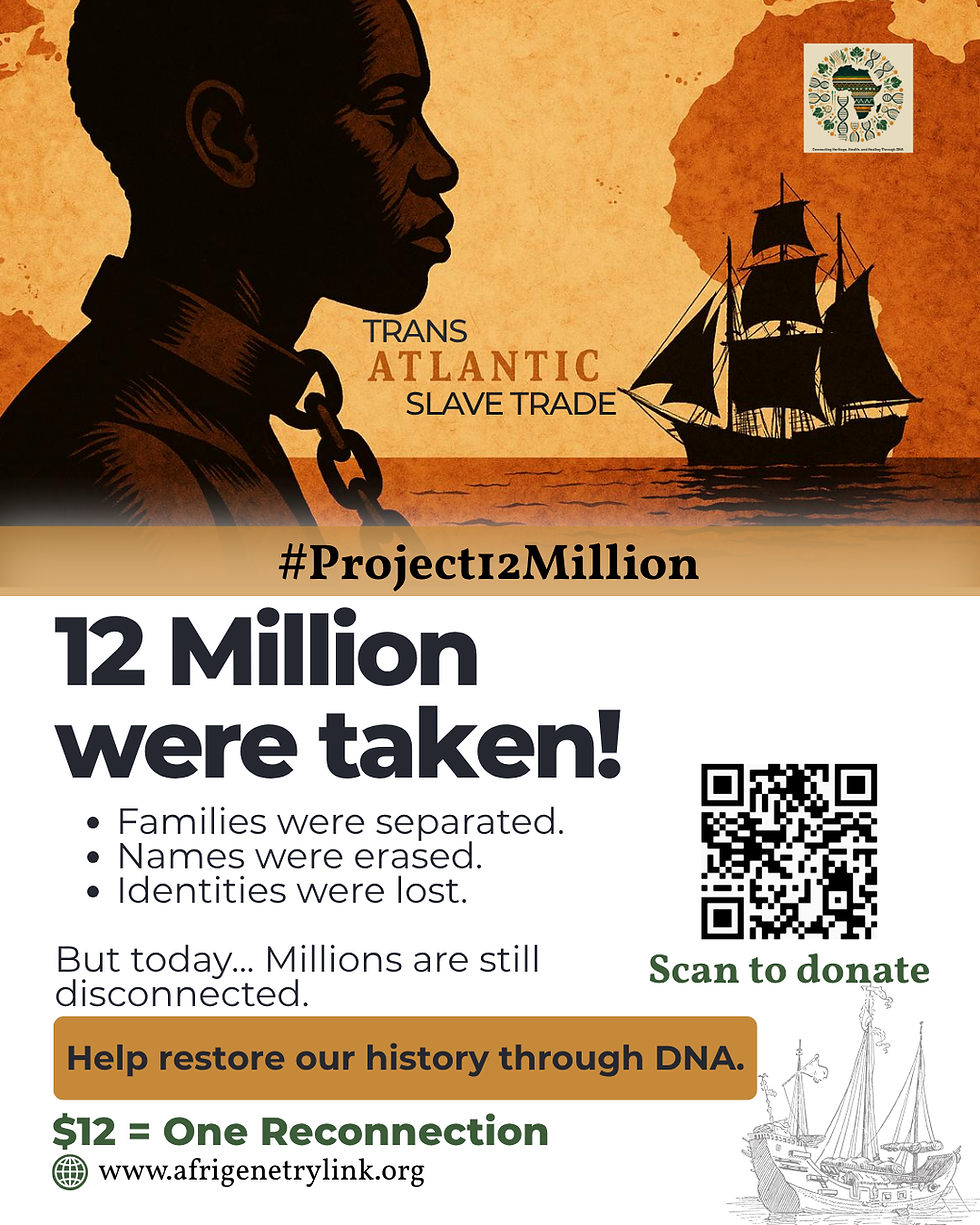
For over three centuries, millions of Africans were forcibly taken from their homelands and transported across the Atlantic. Families were torn apart. Names were erased. Identities were lost. But what history often fails to say is this:
The disconnection did not end.
Today, millions of people of African descent are still searching for their roots, not because their families are gone, but because they are missing from the system.

The Story of the Transatlantic Slave Trade
Between the 15th and 19th centuries, European powers established a vast network to capture, transport, and enslave Africans. This trade was driven by the demand for labor in the New World, especially on plantations growing sugar, tobacco, cotton, and other cash crops. The journey across the Atlantic, known as the Middle Passage, was horrific. Enslaved people were packed tightly into ships under inhumane conditions, with many dying from disease, malnutrition, or abuse.
The scale of the trade was staggering. Estimates suggest that between 12 and 15 million Africans were shipped across the Atlantic. Many more died during capture or transport within Africa. The trade devastated African societies, disrupting economies, cultures, and families. It also created a vast African diaspora, with descendants living throughout the Americas and beyond.What Is the Best Black Ancestry DNA Kit?
The legacy of the transatlantic slave trade continues to affect societies today. It shaped racial and social hierarchies, contributed to systemic inequalities, and left many descendants disconnected from their origins. For centuries, the histories and identities of enslaved Africans were erased or obscured.
The Hidden Problem: The System Is Incomplete
DNA technology has given hope to millions.
People take tests. They receive results. They see percentages such as Nigeria, Ghana, or Senegal.
But when it comes to finding real family connections, the search often ends in silence.
Why?
Because less than 3 percent of global DNA databases represent African populations.
That means the system only exists on one side. The diaspora is searching. But Africa is largely not in the system.
This gap does not only affect ancestry.
It affects lives.
When African DNA is missing from global datasets, medical research becomes incomplete, treatments may not work effectively for Black populations, and preventable genetic conditions go undetected.
This is a genomic health and equity gap, and it has real consequences.
Why Reconnection MattersAfrican Ethnic Groups and DNA Origins: A Complete Guide to Africa's Genetic and Cultural Diversity
Reconnecting Africa with its diaspora is more than a symbolic gesture. It offers a chance to heal historical wounds and restore a sense of identity and belonging. Many descendants of enslaved Africans seek to understand their origins, learn about their cultures, and reclaim lost histories.
This reconnection can:
Strengthen cultural identity by rediscovering languages, traditions, and customs.
Promote healing by acknowledging the past and fostering dialogue.
Build community among people with shared heritage across continents.
Support education and awareness about the history and impact of the slave trade.
For many, the challenge lies in the lack of written records. Enslaved Africans were often stripped of their names and histories, making it difficult to trace lineage through traditional genealogical methods.

How DNA Helps Bridge the Gap
DNA testing has emerged as a valuable tool for reconnecting the African diaspora with their roots. By analyzing genetic markers, individuals can identify regions in Africa where their ancestors likely lived. This scientific approach offers insights that historical records cannot provide.
There are several types of DNA tests relevant to this process:
Autosomal DNA tests trace ancestry from both parents and can reveal connections within the last five to seven generations.
Mitochondrial DNA (mtDNA) tests trace maternal lineage, passed from mother to child.
Y-chromosome DNA tests trace paternal lineage, passed from father to son.
These tests can identify ethnic groups, regions, and sometimes even specific communities in Africa. For example, many African Americans discover links to West African countries such as Nigeria, Ghana, or Senegal, which were major points of departure during the slave trade.
DNA testing also helps uncover the diversity within the African diaspora. It reveals mixed ancestries and connections to multiple African ethnic groups, reflecting the complex history of migration and displacement.
The Great Reconnection - Project 12 Million
This is why AfriGenetry Link was created.
AfriGenetry Link is a global nonprofit focused on connecting heritage, health, and healing through DNA.
Through our flagship initiative:
The Great Reconnection: Project 12 million Powered by the 12.12 Identity Challenge
We are working to build the missing side of the bridge.
Through this movement, AfriGenetry Link is expanding DNA access across African communities, organizing community DNA pop-up events, launching campus identity and reconnection tours, preserving oral histories before they are lost, supporting genetic health awareness and prevention, and training a new generation of genetic counselors and genealogists.
Our goal is simple.
To bring Africa into the system so the diaspora can finally find their way home.
offering resources, cultural events, and educational programs.

The Broader Impact of Reconnection - The 12.12 Identity Challenge
We believe something powerful.
A global problem can be solved through collective action.
That is why we launched the 12.12 Identity Challenge.
12 dollars represents one voice, one story, and one step toward reconnection.
Your contribution helps fund DNA access in underrepresented African communities, support identity restoration programs, preserve family histories, and close the global DNA data gap.
Reconnecting through DNA goes beyond individual identity. It fosters global awareness of the shared history between Africa and its diaspora. This connection can:
Encourage cross-cultural exchange and collaboration.
Promote economic and social development through partnerships.
Support advocacy for social justice by highlighting historical injustices.
Inspire new generations to embrace their heritage and contribute to community growth.
The process also challenges stereotypes and misconceptions about African identities. It highlights the continent’s rich diversity and the resilience of its people.
Take Action
This is a movement.
A movement to reconnect what was broken, restore what was lost, and build a bridge between Africa and its global diaspora.
One family at a time.
One story at a time.
One life at a time.
Support The Great Reconnection: Project 12 Million.
Donate. Share. Be part of the solution.
Your support helps bring families back together, restore identity, and create a future where our communities are fully represented in both history and health.
Discover Your Family's Story
African history provides the broader context for your personal ancestry journey. Learn how genealogy research and DNA testing work together to reveal family origins.
Continue with:
African Genealogy & Family History
DNA and Ancestry
African Genetic Heritage
Human Migration and Genetic Diversity (or your future migration pillar)



Comments