
African Genetic Diversity: Why Africa Holds the World's Greatest Genetic Heritage

Updated: Jul 31
Africa is the birthplace of modern humans and home to the greatest genetic diversity on Earth. Every population around the world traces its ancestry back to Africa, making the continent central to understanding human evolution, health, and disease. Despite this extraordinary diversity, African populations have historically been underrepresented in genetic research, limiting the benefits of genomic medicine for millions of people.
Improving our understanding of African genetic diversity is essential for advancing genetic equity, developing more accurate medical treatments, and ensuring that precision medicine benefits everyone—not just populations that have been extensively studied.Genomic Equity: Building an Inclusive Future for African Health and Ancestry
What Is African Genetic Diversity?
Genetic diversity refers to the natural variation in DNA among individuals and populations. These genetic differences influence physical characteristics, inherited traits, disease risk, and how people respond to medicines.
Africa contains more human genetic variation than any other continent because modern humans evolved there over 200,000 years ago. As people migrated out of Africa, only a portion of this genetic diversity travelled with them, meaning African populations today retain the richest collection of human genetic variation.
This diversity provides researchers with valuable insights into human biology, evolution, and health.
Why Africa Has the Greatest Genetic Diversity
Several factors explain Africa's remarkable genetic diversity:African DNA Testing: The Complete Guide to Tracing Your African Heritage Through DNA
Modern humans originated in Africa.
African populations have had the longest time to accumulate genetic variation.
Thousands of ethnic groups and languages reflect long and complex population histories.
Diverse environments have shaped unique genetic adaptations over thousands of years.
Historical migration and cultural exchange have contributed to rich genetic diversity across the continent.
These factors make African populations invaluable for genomic research and medical discovery.
Why African Genetic Diversity Matters
Studying African genomes benefits both Africa and the global scientific community.
Better Disease Research
African genomic research helps scientists identify genetic factors linked to diseases such as:
Sickle cell disease
Breast cancer
Prostate cancer
Diabetes
Hypertension
Cardiovascular disease
Rare genetic disorders
Understanding these conditions in diverse populations supports earlier diagnosis and more effective treatments.
Improving Precision Medicine
Precision medicine uses a person's genetic information to guide healthcare decisions. However, precision medicine is only as effective as the data used to develop it.
Including African populations in genomic research helps improve:
Drug safety
Medication effectiveness
Genetic testing accuracy
Disease risk prediction
Personalised healthcare
Greater representation ensures medical advances benefit people from all backgrounds.
Discovering New Genetic Variants
Researchers continue to discover previously unknown genetic variants in African populations. Many of these variants improve our understanding of:
Human evolution
Immune system function
Disease resistance
Adaptation to different environments
Population history
These discoveries expand scientific knowledge while supporting more inclusive healthcare.
The Link Between African Genetic Diversity and Genetic Equity
Although Africa has the world's richest genetic diversity, many genomic databases still contain relatively little African genetic data.
This imbalance creates challenges such as:
Less accurate genetic tests for African populations
Higher rates of uncertain genetic test results
Limited representation in genomic databases
Reduced access to precision medicine
Healthcare inequalities
Addressing these gaps is central to achieving genetic equity, ensuring everyone benefits fairly from advances in genomics regardless of ancestry or geographic location.
African Genetic Diversity and the Global African Diaspora
African genetic diversity also helps people across the African diaspora reconnect with their ancestral origins.
DNA testing can help individuals:
Explore ancestral connections
Understand migration patterns
Learn about African population history
Build family histories
Strengthen cultural identity
When interpreted responsibly, ancestry testing provides valuable educational insights while recognising that genetics represents only one part of a person's identity.
Challenges Facing African Genomic Research
Despite significant progress, important challenges remain.
These include:
Limited research funding
Shortage of genomic infrastructure
Unequal access to DNA testing
Limited public awareness
Underrepresentation in international research
Ethical concerns surrounding data sharing
Need for stronger community engagement and informed consent
Addressing these challenges requires collaboration between researchers, governments, healthcare providers, and communities.
Building a More Inclusive Future
Initiatives across Africa are working to improve genomic research, strengthen scientific capacity, and promote equitable participation.
These efforts include:
Expanding African-led genomics research
Supporting ethical data governance
Increasing public genetic literacy
Training African scientists
Improving access to genomic technologies
Encouraging community participation in research
Together, these initiatives contribute to a future where genomic medicine benefits everyone.
How AfriGenetry Link Supports Genetic Equity
At AfriGenetry Link, we believe understanding African genetic diversity is essential for improving health, preserving heritage, and advancing scientific discovery.
Our mission is to:
Promote genetic literacy across Africa
Support African ancestry education
Encourage ethical genomic research
Increase public awareness of genetic equity
Help communities understand genetics in simple, accessible language
By sharing trusted educational resources, we aim to make genomics more inclusive and accessible for Africans and the global African diaspora.
Frequently Asked Questions
What is African genetic diversity?
African genetic diversity refers to the wide range of genetic variation found among African populations. Africa contains the greatest human genetic diversity in the world.
Why is Africa important in genomics?
Africa is the birthplace of modern humans and contains the richest human genetic variation, making it essential for understanding health, disease, and human evolution.
How does African genetic diversity improve medicine?
Studying diverse African genomes helps researchers develop more accurate genetic tests, improve drug responses, and advance precision medicine.
What is genetic equity?
Genetic equity aims to ensure that all populations benefit fairly from advances in genetics and genomics, regardless of ancestry or geographic location.
Can African genetic diversity help ancestry research?
Yes. African genetic diversity provides valuable information that helps improve ancestry research and supports people seeking to understand their family origins.
Related Resources
Continue learning:
Genetic Equity in Africa
African Genomics Explained
Precision Medicine in Africa
Understanding DNA Testing
African Ancestry and Family History
Population Genomics in Africa
References
World Health Organization (WHO). Genomics and Health. https://www.who.int/health-topics/genomics
National Human Genome Research Institute (NHGRI). About Genomics. https://www.genome.gov/about-genomics
Human Heredity and Health in Africa (H3Africa). https://h3africa.org/about/
African Society of Human Genetics (AfSHG). https://afshg.org/
Nature Reviews Genetics. Human genetic diversity and its importance for medicine.
National Institutes of Health (NIH). All of Us Research Program.
Wellcome Sanger Institute. African Genome Variation Project.Precision Medicine in Africa: Transforming Healthcare Through Genomics, DNA Testing, and Personalized Medicine
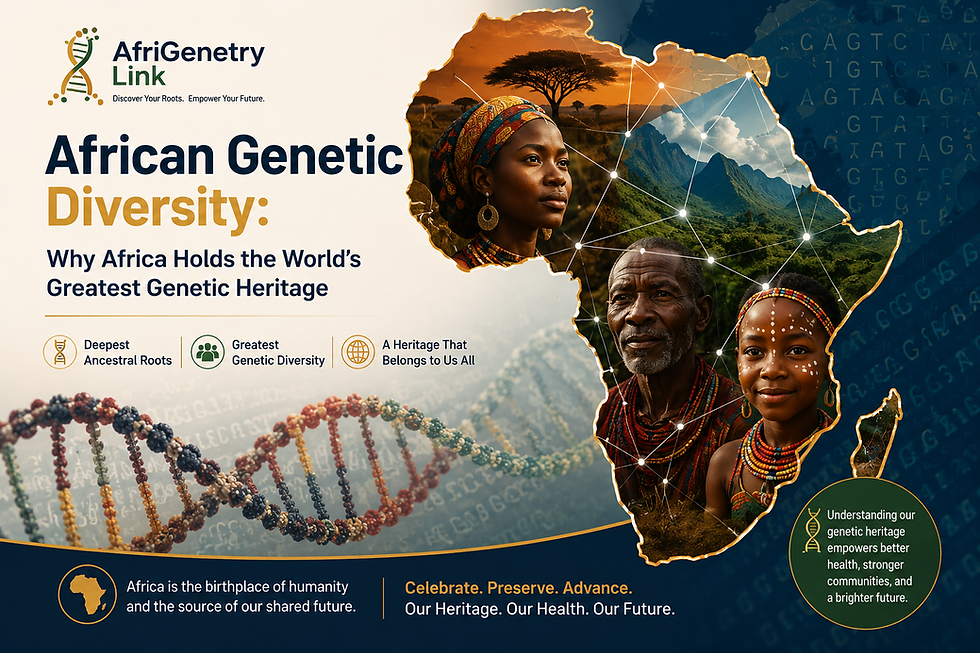
Genomic Equity: Building an Inclusive Future for African Health and AncestryIllustration of Africa's genetic diversity featuring the African continent, DNA strands, and people representing the continent's rich ancestral heritage and genomic diversity.

Comments